Home › Common Problems › Bowing Foundation Walls
Bowing Foundation Walls
in Wilmington, NC
Foundation walls bow inward when wet soil outside builds up pressure they were not designed to handle. The heavy clay soil in parts of inland Wilmington near Masonboro Loop and Gordon Road holds water for days after a storm, and that standing water keeps pushing on the wall. A bowing wall does not stabilize on its own, and if it goes long enough, it can fail.
Wilmington Concrete Repair Pros helps Wilmington, NC homeowners fix bowing foundation walls — call for a free inspection.
Quick Answer
A bowing foundation wall means the soil outside is pushing the wall inward. In Wilmington, this happens most often after heavy rain soaks the ground and adds weight against the wall. Carbon fiber straps or steel wall anchors are the standard repairs. A wall that has moved more than two inches inward is a serious structural problem and needs to be inspected right away. Call (910) 408-5690 if you see any inward curve.
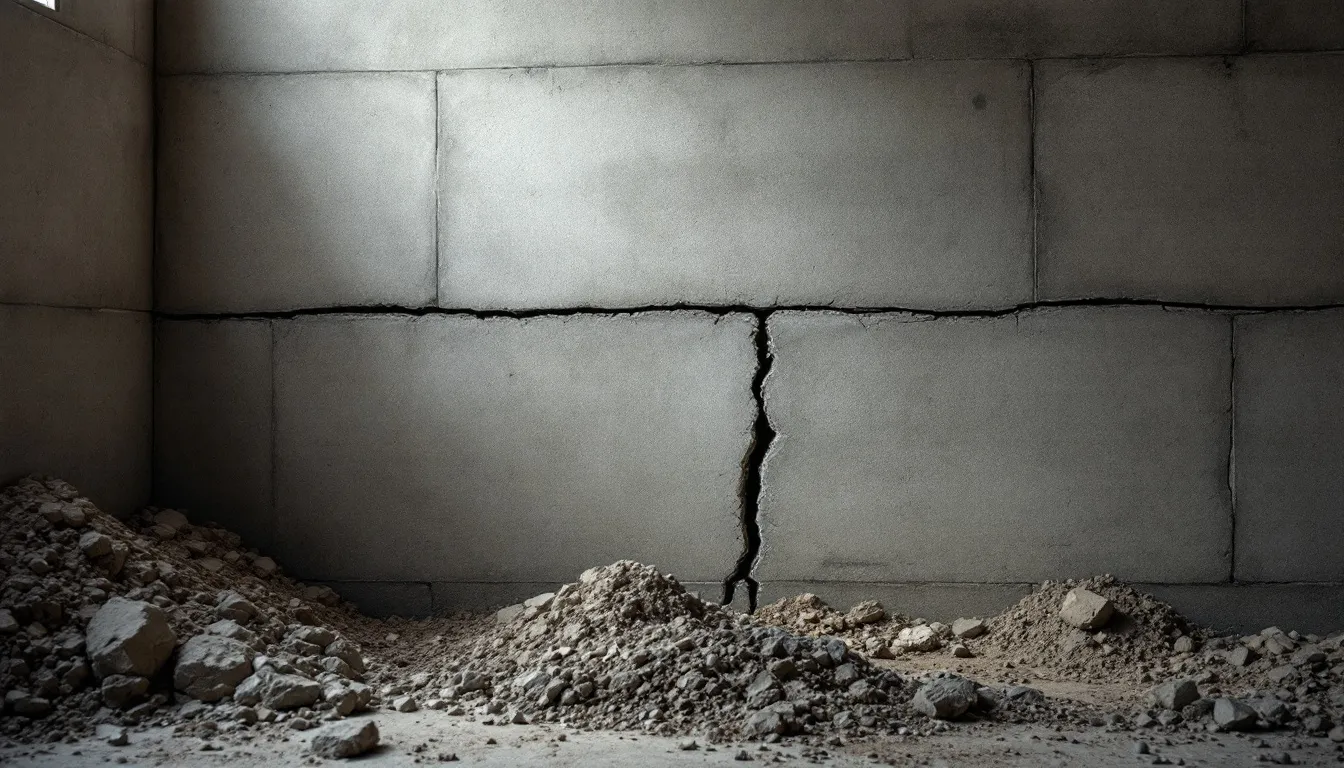
Telltale Signs
Warning Signs to Watch For
- A visible curve or bulge in a concrete block or poured wall
- Horizontal cracks running across a basement or crawl space wall
- Stair-step cracks in concrete block following the mortar joints
- Gaps opening between the wall and the floor or ceiling
- Doors or windows near the wall that stick or no longer close right
- Dirt or water seeping in through cracks in the wall
Root Causes
What Causes Bowing Foundation Walls?
Saturated Soil Pressure
Heavy clay soil in inland Wilmington neighborhoods absorbs water slowly and holds it for a long time after rain. That soaked soil can weigh significantly more than dry soil, and it presses against the foundation wall from the outside. Over time, that pressure bends the wall inward.
The Fix
Carbon Fiber Strap Installation
Carbon fiber straps are bonded vertically to the inside of the wall to stop further movement. They will not push the wall back out, but they will keep it from getting any worse, which is the first goal.
Missing or Failed Drainage
Many homes built before 1990 in Wilmington were not built with proper drainage behind the foundation wall. Without gravel and a drain pipe to move water away, water collects right against the wall every time it rains hard, which Wilmington does frequently during hurricane season.
The Fix
Exterior Drainage Correction and Wall Repair
A drain pipe and gravel backfill are installed outside the wall to direct water away before it builds up. The wall still needs to be repaired or reinforced, but without fixing the drainage, the problem comes back.
Wall Anchors Pulling Out
Some older bowing walls had steel anchors installed years ago to hold them in place. If those anchors were not set deep enough into stable soil, or if the soil around them has eroded, they stop working and the wall resumes moving. This is more common in sandy coastal soils east of Highway 17.
The Fix
Helical Pier Anchor Replacement
Helical anchors, which screw down into deeper stable soil, replace the failed anchors and provide reliable resistance to wall movement. The wall can sometimes be gradually straightened over time once proper anchors are in place.
Self-Diagnosis
Which Cause Applies to You?
Check the signs you're observing to narrow down the likely root cause before your inspection.
| What You're Seeing | Saturated Soil Pressure | Missing or Failed Drainage | Wall Anchors Pulling Out |
|---|---|---|---|
| Horizontal crack in the middle third of the wall | |||
| Wall bowing inward but old anchor bolts still visible | |||
| Water seeping through cracks in the wall after heavy rain | |||
| Stair-step cracks following mortar joints on a block wall | |||
| Wall movement gets noticeably worse after a wet season |
Free Quote
Get a free quote in Wilmington
No obligation — tell us what's going on and we'll text you back shortly.
Other Problems
Services That Fix This
Bowing Foundation Walls Near You
Also Helpful