Home › Common Problems › Concrete Patio Drainage Problems
Concrete Patio Drainage Problems
in Wilmington, NC
A concrete patio should slope away from the house, not toward it. In Wilmington, where heavy afternoon thunderstorms can drop several inches of rain in an hour, a flat or back-sloped patio pushes a lot of water straight at the foundation. Over time that water finds cracks and gaps and works its way into the house, and the soil near the foundation gets saturated and can start to undermine it.
Wilmington Concrete Repair Pros helps Wilmington, NC homeowners fix concrete patio drainage problems — call for a free inspection.
Quick Answer
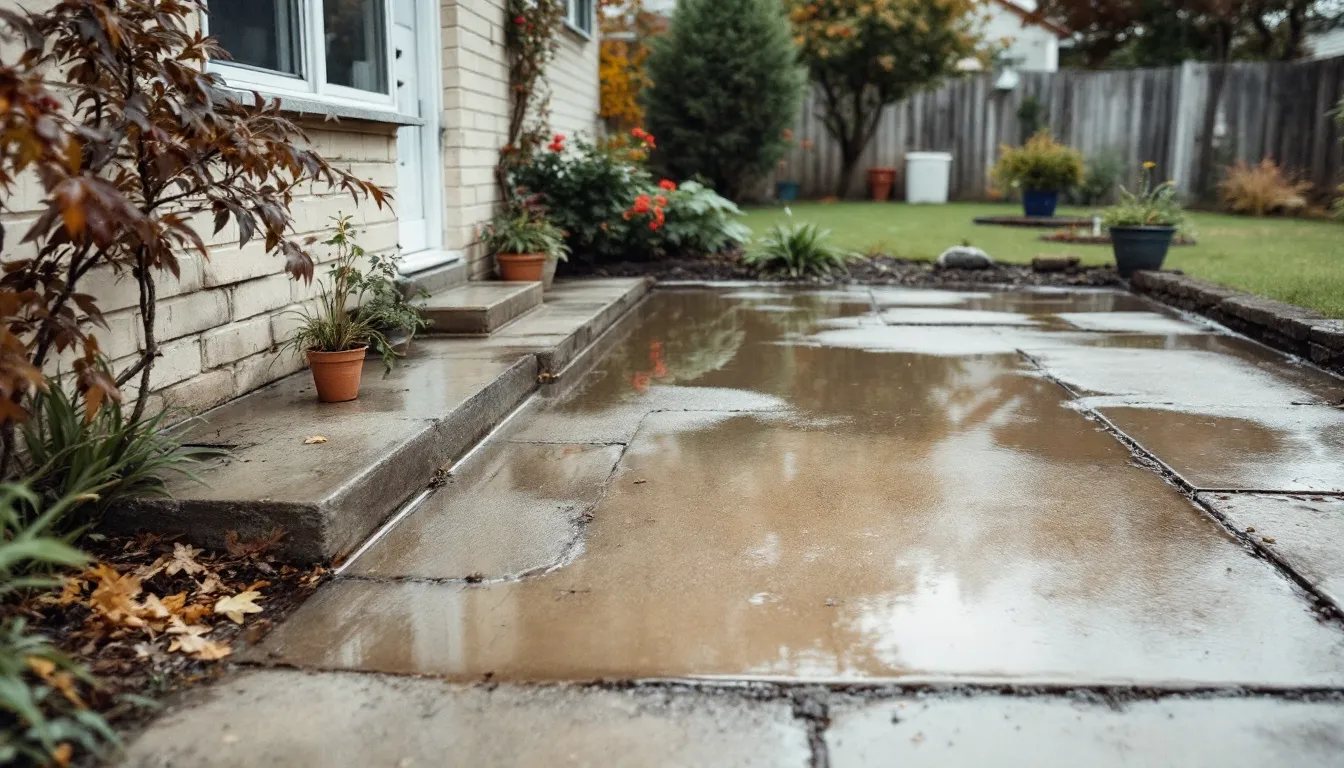
Patio drainage problems mean water is sitting on the concrete instead of running off. In Wilmington, this is often because the patio was poured flat or has settled toward the house over time. Fixing it usually means either lifting and re-sloping the existing slab, cutting drainage channels into it, or in bad cases tearing it out and starting over with the right slope. Standing water against your house foundation is not something to let sit.
Telltale Signs
Warning Signs to Watch For
- Puddles on the patio that do not drain within an hour after rain
- Water running toward the house instead of away from it
- A wet or damp area on the interior wall or floor inside the house near the patio
- Green algae or moss growing on the low side of the patio
- A visible dip or sag in the middle or near the house end of the slab
- Mud or soil washing out from under the patio edge near the house
Root Causes
What Causes Concrete Patio Drainage Problems?
Slab Settled Toward House
The soil near the foundation settles over time as it compacts under the weight of the house. If the patio slab settles with it, the slope tips backward toward the house. Sandy coastal soils common in the areas around Wilmington settle unevenly, which makes this more likely.
The Fix
Slab Lifting and Re-Sloping
Grout or foam is pumped under the low side of the slab to lift it back to the correct slope, directing water away from the house. If the slab is cracked or too damaged to lift cleanly, it needs to come out.
Patio Poured Without Adequate Slope
Concrete patios need at least a one-quarter inch drop per foot to drain properly. Some patios in Wilmington subdivisions built quickly during the 2000s growth period were poured nearly flat to save time and effort. A flat patio will hold water every time it rains.
The Fix
Concrete Overlay with Slope Correction
A concrete overlay can be applied to build up the low areas and create the correct slope if the existing slab is still solid. This is only a good option if the slab is not cracked or sinking.
Blocked or Absent Drain
Some patios were built with a center drain or a drain along the house wall, but those drains get clogged with leaves, dirt, and debris over time. In Wilmington, falling leaves from live oaks can block a patio drain in a single season and turn a properly designed patio into a pond.
The Fix
Drain Cleaning or New Drain Installation
Clearing a blocked drain can solve the problem immediately if the slope is still correct. If there was never a drain installed, a linear trench drain cut into the existing slab is a practical fix.
Self-Diagnosis
Which Cause Applies to You?
Check the signs you're observing to narrow down the likely root cause before your inspection.
| What You're Seeing | Slab Settled Toward House | Patio Poured Without Adequate Slope | Blocked or Absent Drain |
|---|---|---|---|
| Water runs toward the house along the full width of the patio | |||
| Puddles form in the middle of the patio, not just near the house | |||
| Drain grate visible but clogged with debris | |||
| One corner of the patio is noticeably lower than the rest | |||
| Patio less than 15 years old but already holding water |
Free Quote
Get a free quote in Wilmington
No obligation — tell us what's going on and we'll text you back shortly.
Other Problems
Services That Fix This
Concrete Patio Drainage Problems Near You
Also Helpful