Home › Common Problems › Spalling Concrete Surface
Spalling Concrete Surface
in Wilmington, NC
Spalling is what happens when the surface of concrete starts flaking off and pitting. Near the coast in places like Wrightsville Beach and Carolina Beach, salt air speeds up this process by pulling moisture into tiny pores in the concrete and breaking it apart from the inside. Once spalling starts, water gets into those exposed areas and makes things worse every time it rains.
Wilmington Concrete Repair Pros helps Wilmington, NC homeowners fix spalling concrete surface — call for a free inspection.
Quick Answer
Spalling means the top layer of concrete is breaking off in flakes or chunks. In Wilmington, it is usually caused by salt air eating into the concrete surface over time, or by water getting in and then expanding. Surface patching can fix small spots, but if spalling covers most of a slab, the concrete is likely weak all the way through and should be replaced. The longer you wait, the more concrete you lose.
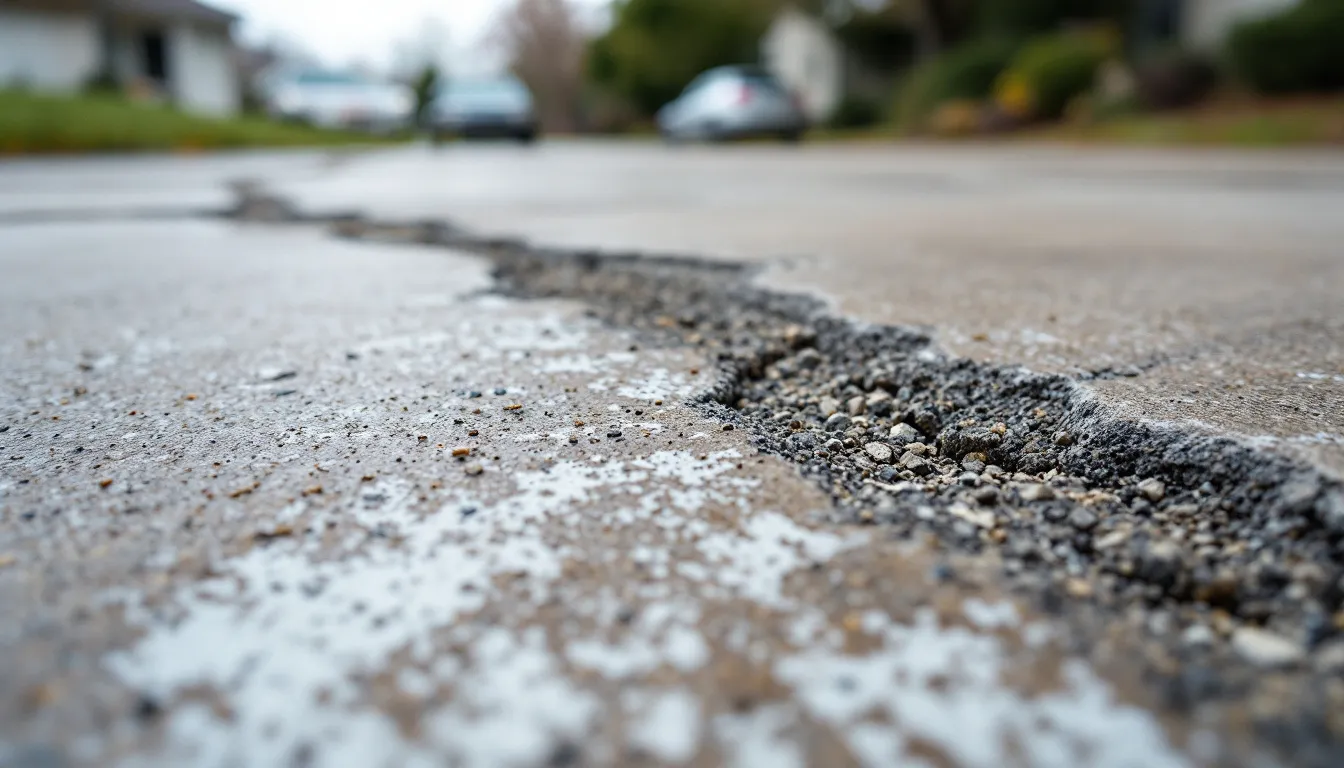
Telltale Signs
Warning Signs to Watch For
- Flakes or chunks of concrete scattered on the surface
- Rough, pitted texture where the surface used to be smooth
- Rust-colored stains near spalled areas where steel reinforcement is exposed
- Surface crumbling when you press on it or scrape it with your foot
- Shallow craters across the slab that were not there before
- White powdery residue on the concrete surface after it dries
Root Causes
What Causes Spalling Concrete Surface?
Salt Air Corrosion
The salt air along the Wilmington coast, especially within a mile or two of the ocean, carries chlorides that soak into concrete over time. Those chlorides corrode the steel reinforcing bars inside the slab, and when steel rusts it expands, which pops the concrete surface off from the inside.
The Fix
Spall Repair and Penetrating Sealer
Damaged surface material is removed down to solid concrete, a bonding agent is applied, and a repair mortar is used to rebuild the surface. A penetrating sealer is applied after to slow down future salt and moisture entry.
Freeze-Thaw Damage
Wilmington does drop below freezing several nights a year, usually in January and February. Water that has soaked into the concrete surface freezes, expands, and pops small pieces of concrete off. Repeat this enough winters and the surface breaks apart.
The Fix
Surface Resurfacing
If the base concrete is still solid, a thin layer of resurfacing compound can be applied over the cleaned surface. This is only a good fix if the damage is limited to the top quarter inch or so.
Low-Quality Original Mix
Concrete poured with too much water added to the mix ends up weak and porous once it cures. This was common in lower-cost construction projects in Wilmington through the 1990s. Porous concrete absorbs more water and salt air, so it spalls faster than properly mixed concrete.
The Fix
Full Slab Replacement
When the concrete is soft or crumbling below the surface, patching is a temporary fix at best. The slab needs to come out and be replaced with a properly designed mix and adequate cure time.
Self-Diagnosis
Which Cause Applies to You?
Check the signs you're observing to narrow down the likely root cause before your inspection.
| What You're Seeing | Salt Air Corrosion | Freeze-Thaw Damage | Low-Quality Original Mix |
|---|---|---|---|
| Rust stains appearing near the spalled areas | |||
| Spalling concentrated on the top surface only, no deep cracking | |||
| Spalling on a slab less than 10 years old | |||
| White powder on the concrete surface after drying | |||
| Damage appears mostly in winter or early spring | |||
| Concrete feels soft or crumbles easily when scraped |
Free Quote
Get a free quote in Wilmington
No obligation — tell us what's going on and we'll text you back shortly.
Other Problems
Services That Fix This
Spalling Concrete Surface Near You
Also Helpful