Home › Common Problems › Cracked Concrete Driveway
Cracked Concrete Driveway
in Wilmington, NC
Concrete driveways in Wilmington crack mostly because the soil underneath never stays still. The sandy, loose fill common in areas like Ogden and Monkey Junction absorbs water fast during our 55-plus inches of rain a year, then shrinks back when it dries out. A cracked driveway lets water reach that unstable soil even faster, so the problem gets worse with every storm.
Wilmington Concrete Repair Pros helps Wilmington, NC homeowners fix cracked concrete driveway — call for a free inspection.
Quick Answer
Driveway cracks in Wilmington usually start because the sandy soil underneath shifts when it gets wet, then dries out again. Small cracks can be filled with a concrete caulk or patching compound. Wider cracks, or ones running all the way across a slab, usually mean the base underneath has moved and needs to be addressed first. If you see cracks wider than a quarter-inch, call (910) 408-5690 for an inspection before the next heavy rain makes it worse.
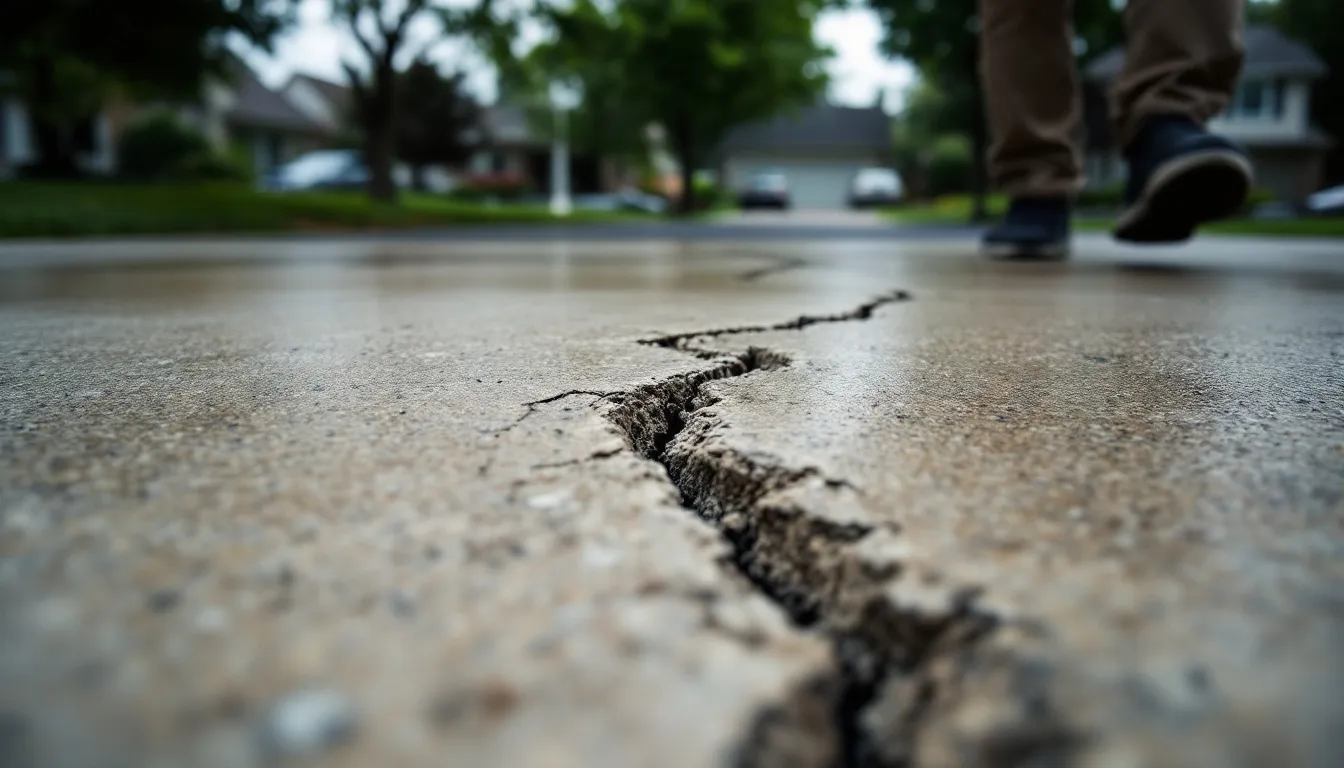
Telltale Signs
Warning Signs to Watch For
- Cracks running across the width of a driveway slab
- Cracks wider than a dime along the edges near the street
- One slab sitting higher or lower than the one next to it
- Small chunks of concrete breaking off along a crack
- Water pooling in a crack after rain instead of running off
- A hollow sound when you tap near a crack with your foot
Root Causes
What Causes Cracked Concrete Driveway?
Unstable Sandy Fill Soil
Much of Wilmington sits on sandy coastal plain soil that does not hold its shape well under a heavy concrete slab. When rainwater soaks in, the sand shifts, and the slab loses its support from below and cracks under its own weight.
The Fix
Slab Lifting and Void Fill
A contractor pumps a cement-based grout or foam under the slab to fill the empty space and lift it back level. This gives the concrete solid support again so the crack does not keep spreading.
Tree Root Pressure
Live oaks and water oaks are everywhere in older Wilmington neighborhoods, and their roots grow outward looking for water. A root that reaches under a driveway slab pushes upward year after year until the concrete cracks and heaves.
The Fix
Root Barrier and Slab Replacement
The damaged section is removed, the root is cut back or redirected, and a physical barrier is installed before the new slab is poured. Skipping the barrier means the same thing happens again in a few years.
Concrete That Was Poured Too Thin
Driveways poured at three inches thick instead of the standard four inches crack much sooner, especially in homes built during the building booms of the 1980s and 1990s in places like Murrayville. Thin slabs cannot handle the repeated weight of a parked car without flexing and cracking.
The Fix
Full Slab Replacement
The thin slab is broken out and hauled away, the base is compacted properly, and a new slab is poured at the correct thickness. Patching a slab that is too thin just delays the same problem coming back.
Self-Diagnosis
Which Cause Applies to You?
Check the signs you're observing to narrow down the likely root cause before your inspection.
| What You're Seeing | Unstable Sandy Fill Soil | Tree Root Pressure | Concrete That Was Poured Too Thin |
|---|---|---|---|
| Crack runs straight across the full width of a slab panel | |||
| One side of the crack is higher than the other side | |||
| A visible root or root bump near the crack | |||
| Multiple slabs cracking in the same pattern across the driveway | |||
| Hollow sound when tapping the slab near the crack |
Free Quote
Get a free quote in Wilmington
No obligation — tell us what's going on and we'll text you back shortly.
Other Problems
Services That Fix This
Cracked Concrete Driveway Near You
Also Helpful