Home › Common Problems › Sunken Concrete Slab
Sunken Concrete Slab
in Wilmington, NC
Wilmington gets heavy rain, and that water finds its way under concrete slabs and washes out the soil that holds them up. Slabs in low-lying areas like Carolina Beach Road corridors and near stormwater ditches are especially prone to this. A sunken slab does not fix itself, and the gap underneath keeps growing every time it rains.
Wilmington Concrete Repair Pros helps Wilmington, NC homeowners fix sunken concrete slab — call for a free inspection.
Quick Answer
A sunken concrete slab in Wilmington usually means the soil underneath has washed away or compressed over time. Slab lifting, sometimes called mudjacking or foam lifting, pushes the slab back to its original height by filling the void underneath. If the slab is also badly cracked or crumbling, replacement is the more honest fix. A slab that has dropped more than an inch is a trip hazard and should be looked at soon.
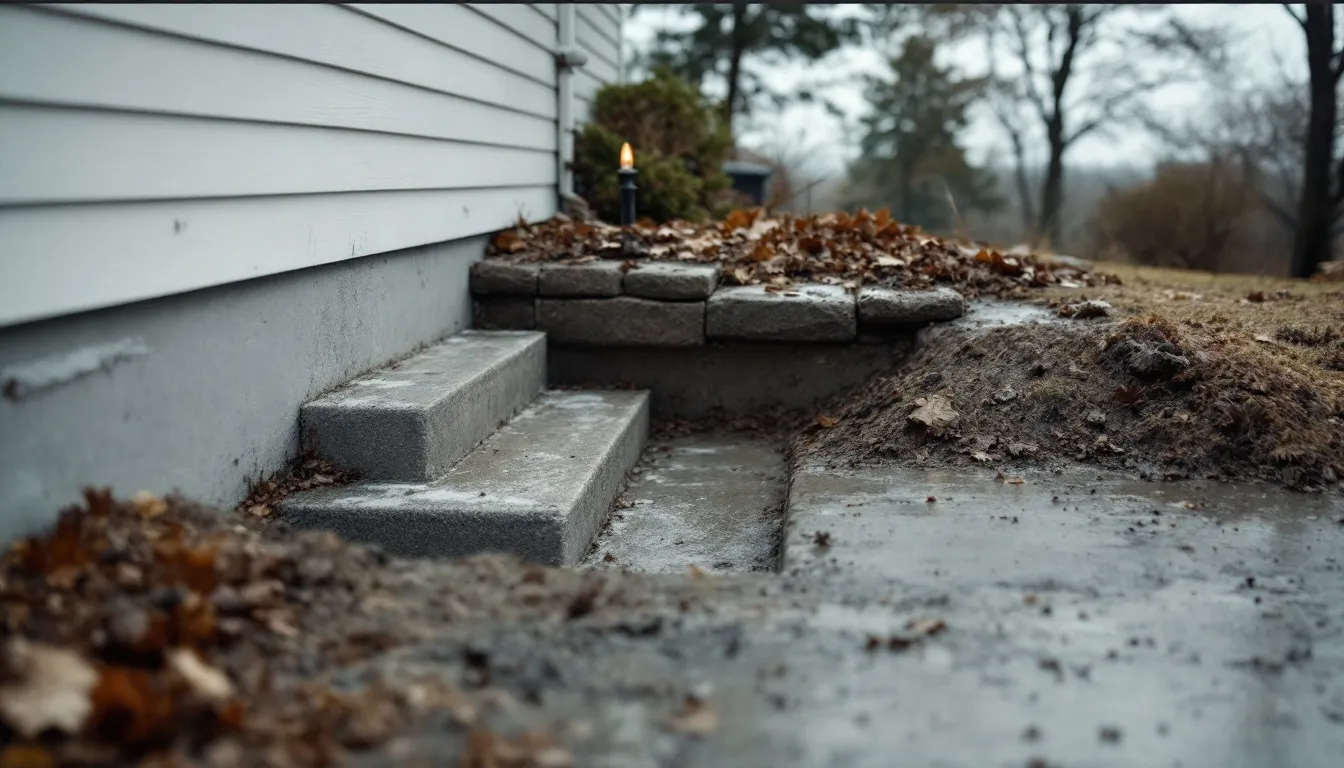
Telltale Signs
Warning Signs to Watch For
- A visible step-down where one slab is lower than the next
- Water running toward your house instead of away from it after rain
- A crack along the edge where the slab dropped
- Dirt or sand washing out from under the edge of the slab
- The slab rocks slightly when you walk on it
- Grass growing up through a gap between the slab and a curb or wall
Root Causes
What Causes Sunken Concrete Slab?
Soil Washout Under Slab
Wilmington averages around 55 inches of rain a year, and that water runs along the underside of slabs, carrying fine sand and soil with it. Over time, a hollow space forms under the concrete, and the slab slowly drops into that space.
The Fix
Polyurethane Foam Lifting
Small holes are drilled in the slab, and expanding foam is injected underneath to fill the void and push the slab back up. The holes are patched and the slab is usable again the same day.
Poorly Compacted Fill at Construction
A lot of homes in newer Wilmington developments like Riverlights and Autumn Hall were built on land that was graded and filled relatively recently. Fill dirt that was not compacted in layers settles on its own for years, and any slab poured on top of it settles right along with it.
The Fix
Slab Lifting with Grouting
A cement grout is pumped under the slab to fill settled areas and bring the slab back to grade. In cases where settling is severe, the slab may need to be replaced on a properly compacted base.
Underground Pipe Leak
A slow leak from an irrigation line or an old clay sewer pipe under a slab will saturate the soil and cause it to compress or wash away. Homes built before 1970 in older Wilmington neighborhoods like Sunset Park often still have clay pipe that cracks with age.
The Fix
Pipe Repair and Slab Replacement
The leaking pipe has to be fixed first, or any lifting work will fail again. Once the soil has dried and stabilized, the slab can be lifted or replaced depending on how much damage was done.
Self-Diagnosis
Which Cause Applies to You?
Check the signs you're observing to narrow down the likely root cause before your inspection.
| What You're Seeing | Soil Washout Under Slab | Poorly Compacted Fill at Construction | Underground Pipe Leak |
|---|---|---|---|
| Water flows toward the house after rain instead of away | |||
| Sand or dirt visible washing out from under the slab edge | |||
| Multiple slabs in a newer subdivision all settling at once | |||
| Slab settled in one specific spot, not along an edge | |||
| Slab rocks or moves slightly underfoot | |||
| Wet or soft soil visible under the slab edge after dry weather |
Free Quote
Get a free quote in Wilmington
No obligation — tell us what's going on and we'll text you back shortly.
Other Problems
Services That Fix This
Sunken Concrete Slab Near You
Also Helpful